
When everyone delivers their scope but the airport still doesn't work
Updated: Aug 6
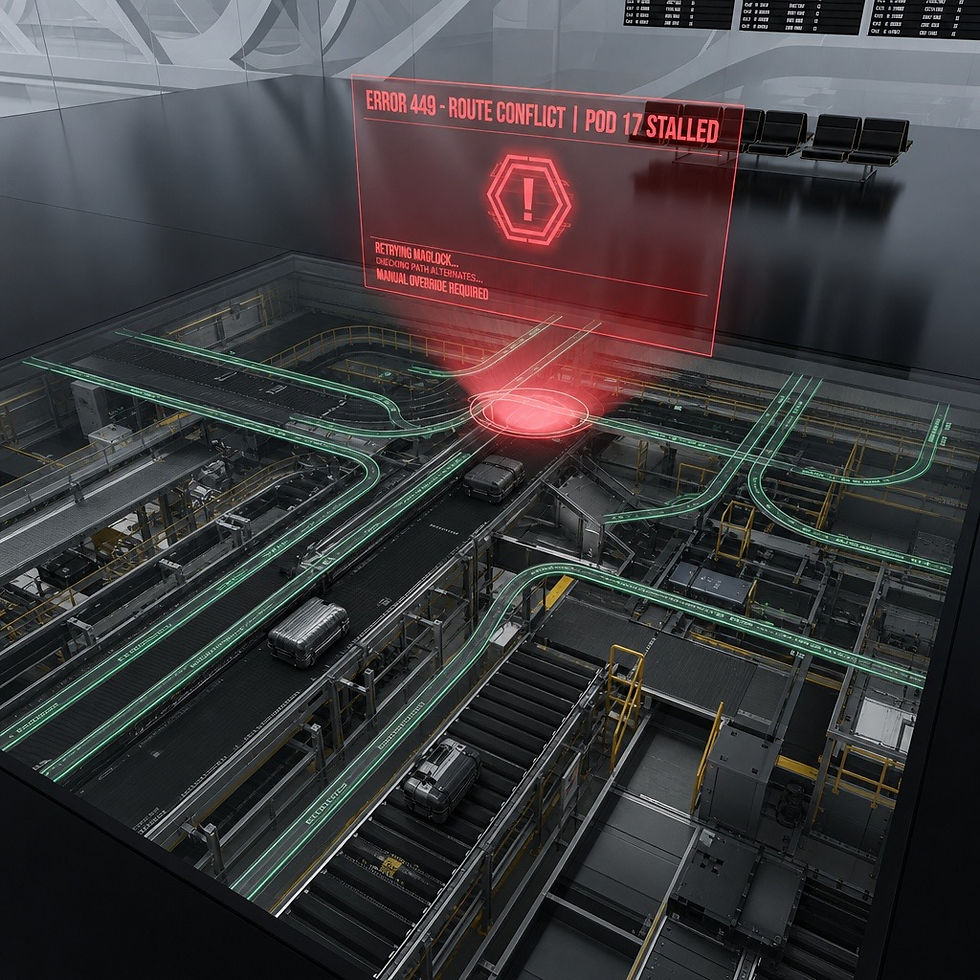
One of the biggest challenges in airport projects is that every supplier can technically deliver their scope successfully whilst the overall operation still struggles to function.
It happens more often than most people realise.
Modern airports are built around highly specialised systems delivered by multiple vendors. Baggage handling. Security screening. Operational databases. Building management systems. Airline interfaces. Control systems. Analytics platforms. Passenger processing technologies. Each supplier focuses on delivering against their contractual requirements, testing their own equipment, and achieving their own milestones.
Individually, many of those systems perform exactly as intended.
The problem appears when they are expected to operate together as a single live airport environment.
Airports are not collections of independent technologies. They are interconnected operational ecosystems where every process depends on another. A delay in one area quickly creates consequences elsewhere. A missed interface message can disrupt baggage routing. A control logic mismatch can impact throughput. An operational assumption made by one supplier may conflict entirely with the assumptions built into another system.
Yet on many projects, no single party owns the full end-to-end operational outcome.
That creates a dangerous gap between technical delivery and operational integration.
It is common for suppliers to complete their own testing successfully whilst critical interactions between systems remain insufficiently validated. Equipment may communicate correctly during controlled testing, but operational workflows behave differently under real conditions. Recovery strategies that appear stable during commissioning may fail under disruption. Responsibilities between suppliers can become blurred the moment unexpected behaviour appears.
When issues emerge late in a project, the consequences escalate quickly.
Programme timelines tighten. Stakeholders become reactive. Root causes become harder to isolate because multiple systems are involved simultaneously. Commercial disputes often follow, with each supplier understandably focused on defending the boundaries of their contractual scope.
Meanwhile, the airport still needs to open.
This is why independent integration management has become increasingly important on complex airport programmes.
The role of third-party integration is not to replace suppliers. It is to coordinate the operational relationship between them. To identify assumptions early. To validate interfaces properly. To challenge gaps between individual scopes before they become operational problems.
Most integration failures are not caused by poor technology. They are caused by fragmented coordination.
The earlier those interactions are understood, the easier projects become to manage.
That includes validating operational logic across systems, aligning testing strategies, coordinating stakeholder responsibilities, and stress-testing how the overall operation behaves under realistic conditions rather than ideal scenarios.
Airports are among the most operationally complex environments in modern infrastructure. Success depends less on whether individual systems work independently and more on whether the entire operation performs collectively.
Because passengers do not experience airport systems separately.
They experience the airport as one journey.


Comments