
A factory acceptance test isn't proof your system will work

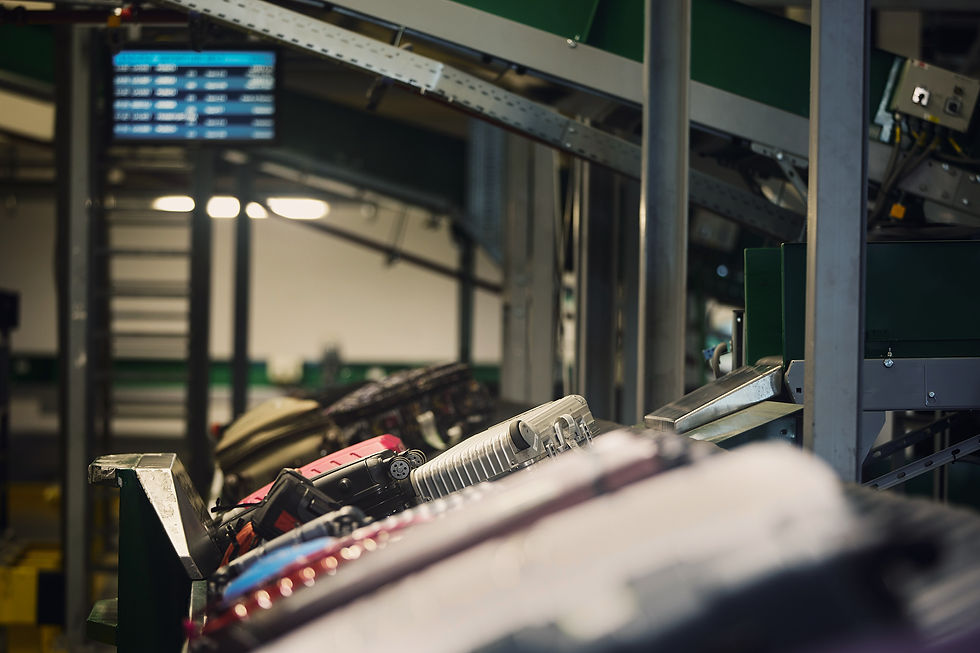
A baggage system can pass every factory test and still fail the moment it meets live airport operations.
That is not because Factory Acceptance Testing (FAT) lacks value. FAT plays a critical role in validating that individual components perform as specified. Motors start correctly. PLC sequences execute. Hardware communicates. Equipment meets the technical requirements it was designed for.
But airports do not operate in factory conditions.
The challenge begins when individual systems, all tested separately and approved independently, are expected to function together inside a live operational environment where variability is constant and ideal conditions rarely exist.
A conveyor might perform perfectly in a controlled test environment. A screening machine may pass every technical benchmark. Controls logic may appear stable during isolated commissioning. Yet once those systems are exposed to real passenger volumes, irregular operations, late gate changes, fluctuating baggage loads, and live operational decision-making, weaknesses begin to surface.
That gap between technical testing and operational reality is where many projects encounter problems.
The issue is rarely a single catastrophic failure. More often, it is the accumulation of small integration and operational issues that only become visible under realistic conditions. Interfaces that behave unpredictably under load. Recovery logic that struggles after disruption. Buffer strategies that work on paper but collapse during peak periods. Manual interventions that gradually become routine because the system cannot consistently manage operational complexity on its own.
Traditional FAT processes are not designed to uncover these problems. They validate equipment. They do not fully validate operational behaviour.
That distinction matters.
Modern airport projects are increasingly complex. Baggage handling systems now sit within an ecosystem of security systems, operational databases, airline messaging platforms, sortation logic, analytics layers, and increasingly automated decision-making tools. Testing components in isolation no longer guarantees operational success.
This is why operational simulation and virtual testing have become critical before deployment reaches site.
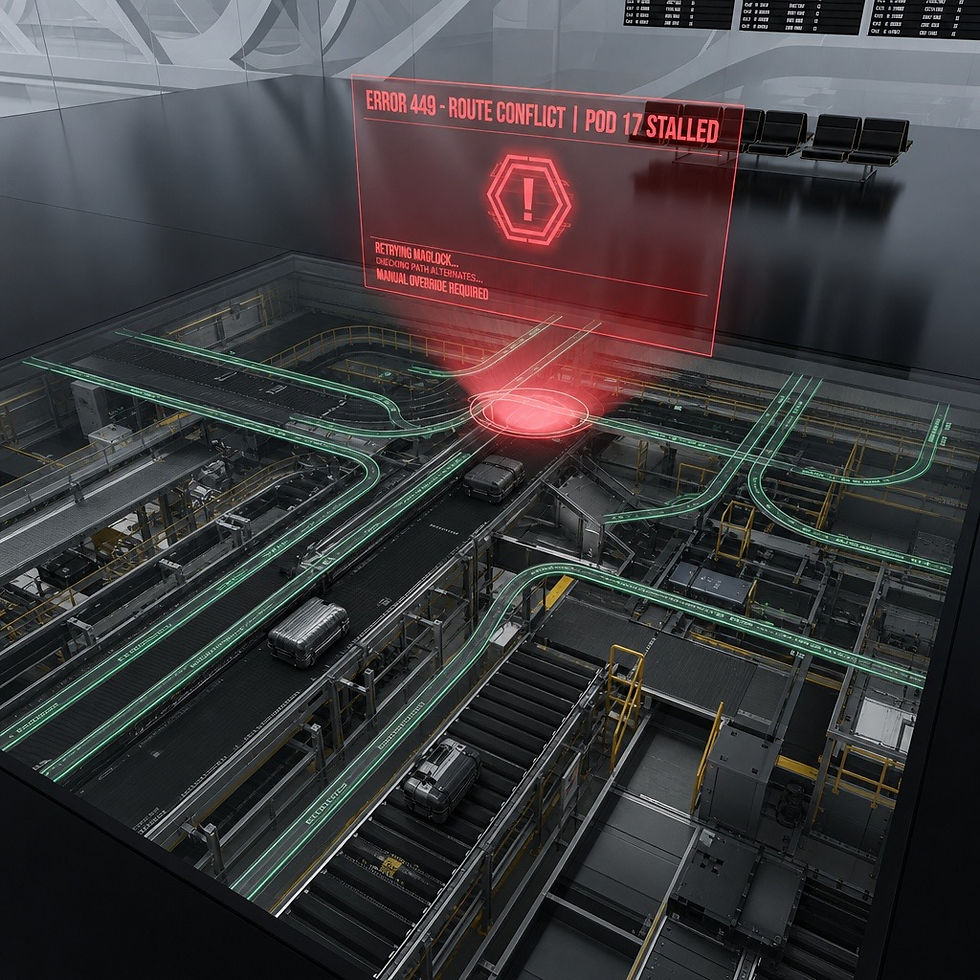
Using physics-based digital twins such as cogITo SMART, airport stakeholders can test systems against realistic operational scenarios before live installation begins. Instead of validating whether equipment simply works, teams can validate whether the entire operation performs under real-world conditions.
Peak departures can be simulated. Disruption scenarios can be introduced. Flight delays, security re-routes, oversized baggage flows, early bag storage saturation, and interface failures can all be tested in a controlled virtual environment where issues can still be corrected efficiently.
The benefit is not simply identifying technical problems earlier. It is reducing uncertainty before operational exposure.
By the time a system reaches live commissioning, decisions become significantly more expensive to reverse. Programme pressure increases. Stakeholders become less willing to introduce change. Operational teams inherit growing risk whilst still trying to maintain airport continuity.
Finding problems earlier changes the entire trajectory of a project.
Successful airport delivery is not about proving that equipment works in isolation. It is about proving the operation will work when everything interacts simultaneously under real operational pressure.
That is the difference between passing a test and achieving operational readiness.


Comments